2026-09-06 · Shawnie Alton
Best Security Cameras for Apartment Complexes
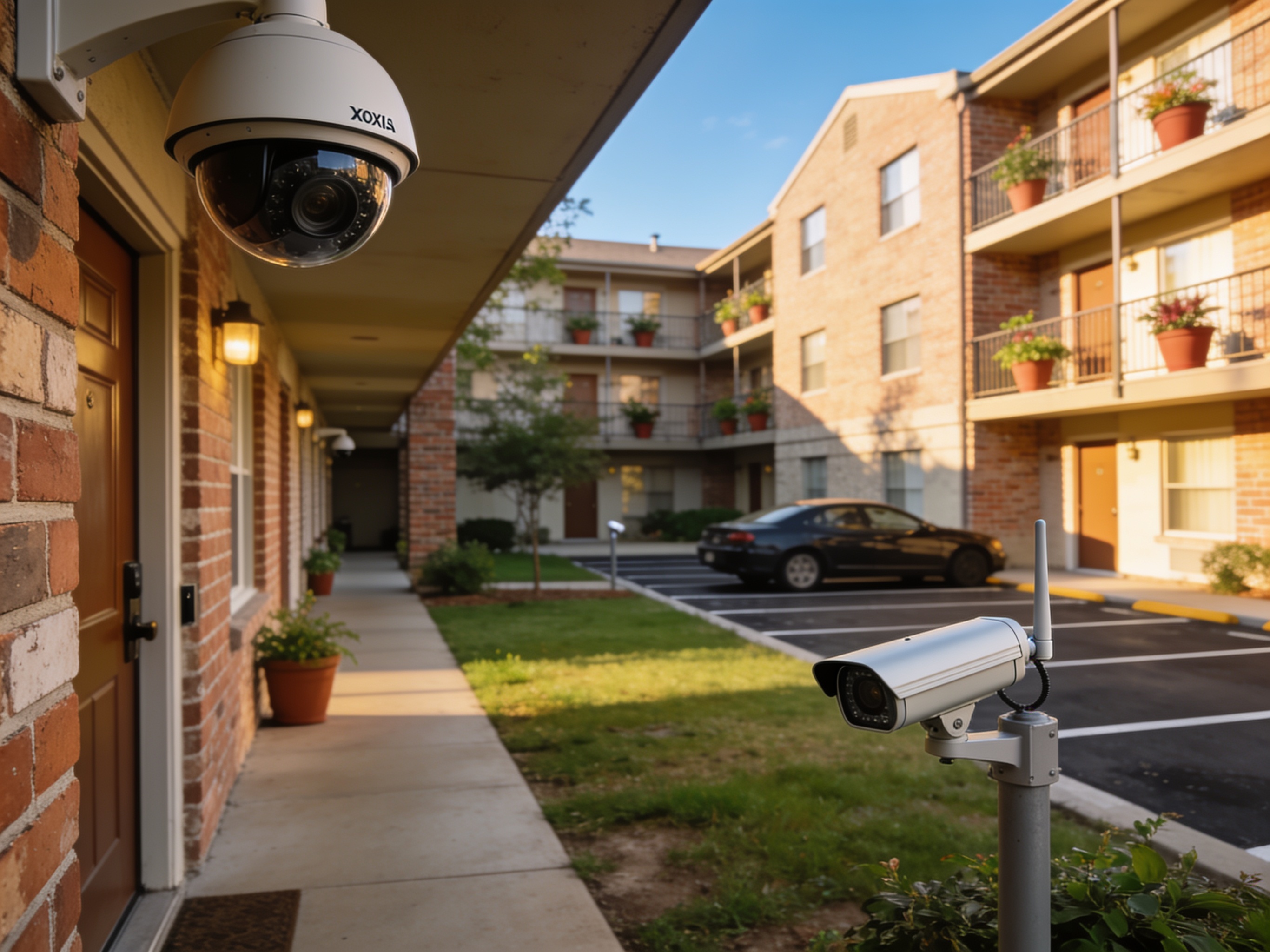
Apartment complexes in Houston perform best with 4K resolution IP PoE cameras featuring 100-foot night vision and wide dynamic range, delivering clear footage of parking lots and entries during heavy rain or low light.
Factors Unique to Houston Apartment Complexes
Houston's humid subtropical climate brings frequent heavy downpours and occasional flooding in low-lying neighborhoods like Montrose and the Heights, which demands cameras with IP66 or higher weatherproof ratings to prevent water damage to lenses and wiring. Apartment buildings here often date from the 1970s through 2000s with multi-story layouts, shared parking lots, and gated entries that require wide-angle lenses covering 90–120 degrees to monitor vehicle and foot traffic without blind spots. Soil conditions with high clay content can shift during wet seasons, so installers route cabling through conduit to avoid ground movement pulling connections loose. These conditions make wireless options less reliable than hardwired PoE runs for consistent performance across larger properties.
Recommended Camera Types and Specs
IP cameras with PoE connectivity stand out for apartment complexes because they transmit both power and data over one cable, reducing failure points in humid environments where corrosion affects separate power lines. Models with 4K sensors capture license plates at 30–50 feet in daylight and maintain detail at night with IR illumination up to 100 feet, essential for Houston complexes where incidents often occur after dark in lots. NVR systems allow centralized storage of 30–60 days of footage from 16–32 cameras, helping property managers review events across buildings without individual DVR units per structure. Wide dynamic range handles bright Texas sunlight contrasting with shaded breezeways, preventing washed-out images common in older analog setups.
Installation Considerations for Multi-Unit Properties
Running PoE cabling through existing conduit in older Houston apartments minimizes disruption to residents while protecting lines from moisture and rodents common in the area. Placement focuses on elevated mounting at 10–12 feet for entries and 15–20 feet for lots to deter tampering yet capture faces and plates clearly. Commercial security camera installation teams account for Houston's wind loads during storms by using reinforced mounts rated for 100 mph gusts. Integration with existing access control systems allows alerts tied to gate activity, improving response times for on-site staff.
Ongoing Performance in Local Conditions
Regular checks every 6 months address dust buildup on lenses from nearby construction and pollen seasons that reduce image clarity in Houston. NVR vs DVR security camera systems: what's the difference? helps managers decide between scalable network storage and traditional recorders based on camera count. Properties in areas like Katy and Sugar Land benefit from systems that store footage off-site to survive power outages during hurricanes. How to choose a security camera system for your business outlines matching resolution and storage to the number of units and lot size for long-term reliability.
Maintenance and Upgrades
Houston's high humidity accelerates corrosion on outdoor housings, so quarterly inspections of seals and connections prevent outages. Upgrading older 720p cameras to 4K IP models improves detail without rewiring entire runs when using existing Cat6 cable. Security camera systems installed at 2644 Eva Pearl Street, Houston, TX support these transitions with owner-operated crews available Mon–Fri 8am–6pm and Sat 9am–2pm for scheduled work.