2026-09-06 · Shawnie Alton
Indoor vs Outdoor Security Cameras
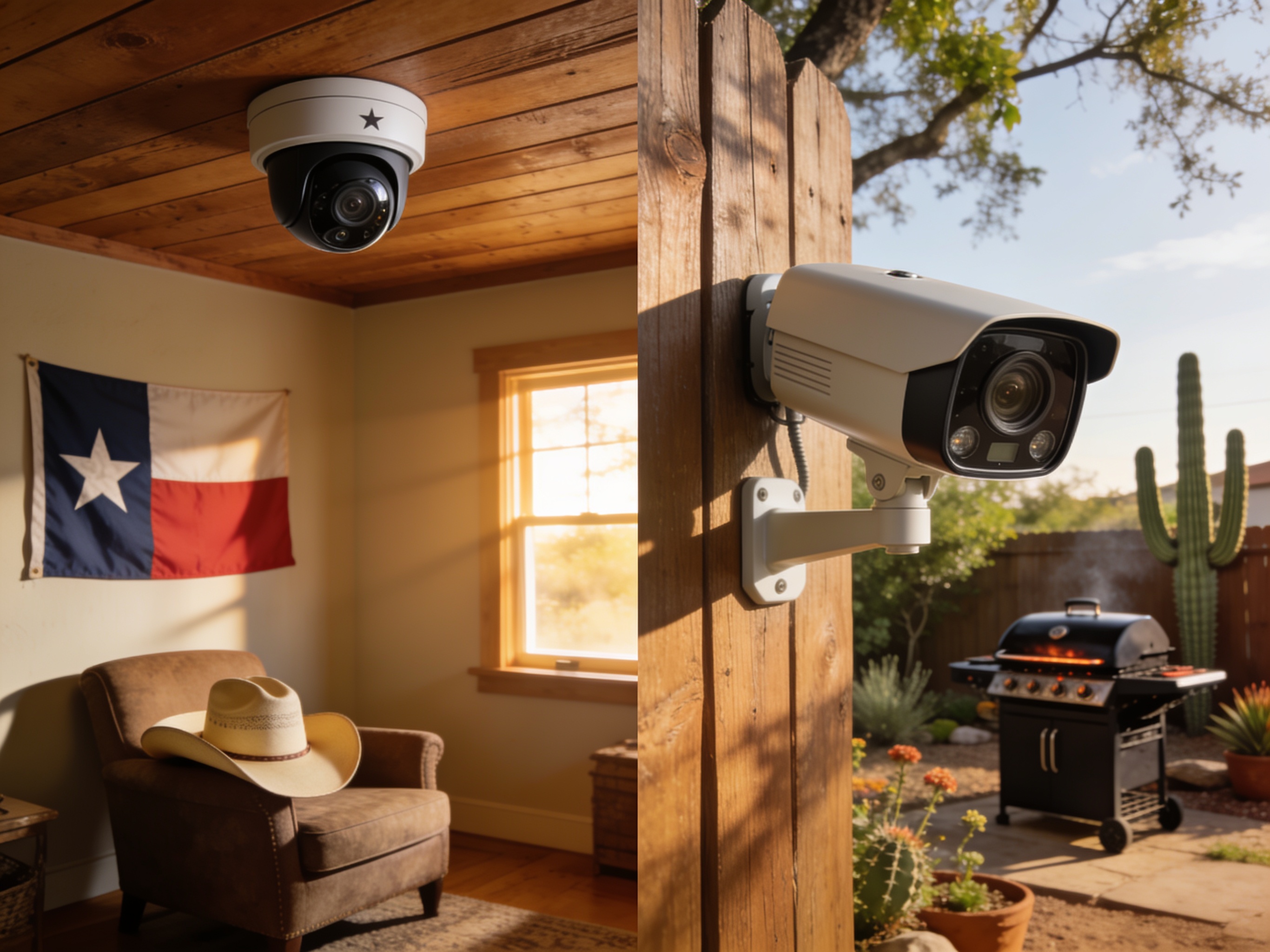
Indoor security cameras focus on controlled interior spaces with emphasis on discreet placement and clear footage in stable lighting, while outdoor models add heavy weatherproofing to handle Houston's humidity, heavy rain, and occasional high winds. The choice starts with identifying whether the camera will face direct exposure to the elements or stay inside protected walls.
Weather Resistance Differences
Houston's frequent rain, high humidity, and summer heat demand specific builds for outdoor units. Outdoor cameras carry IP65 or higher ratings to block moisture and dust, with sealed housings that prevent corrosion on metal components over time. Indoor cameras lack these seals and can fail quickly if placed near windows or doors where condensation builds. Installers often mount outdoor models on brick or siding common in neighborhoods like Montrose and Heights, using conduit to protect cabling from UV damage. Indoor units work well in climate-controlled rooms but need separate consideration for garage or covered patio spots that still see temperature swings. Proper selection avoids early replacement when summer storms hit.
Image Quality and Lighting Needs
Outdoor cameras must manage bright daylight, deep shadows from trees, and nighttime glare from streetlights common along streets in Houston. Models with wide dynamic range sensors maintain detail in these mixed conditions, while lower-end indoor units often wash out near windows. Indoor placements benefit from consistent artificial lighting, allowing simpler lenses to capture faces and movement clearly. Many Houston homes feature large windows that create backlighting challenges, so outdoor cameras positioned to avoid direct sun angles produce more usable footage. Night vision range also differs, with outdoor infrared LEDs covering longer distances across yards and driveways compared to shorter indoor ranges suited for rooms.
Installation Realities in Houston Housing
Most Houston homes built before 1990 have wood framing and limited attic access, which affects how cabling runs between indoor and outdoor locations. Outdoor installations often require drilling through exterior walls and sealing penetrations against rain, while indoor runs stay within finished ceilings or walls. Properties in areas like Bellaire and West University show older stucco exteriors that need careful mounting to avoid cracks. Wireless options reduce some drilling but still require power sources near the camera. Technicians check for existing low-voltage wiring before recommending Security Camera Installation that matches the home's construction. Proper placement also accounts for fence lines and landscaping that can obstruct views differently indoors versus outdoors.
Maintenance and Longevity Factors
Outdoor cameras in Houston collect pollen, dust, and salt air residue that requires periodic lens cleaning to keep images sharp. Indoor units need less frequent attention but can still gather dust on sensors in homes without regular HVAC filter changes. Both types benefit from scheduled checks on connections and firmware, especially after power surges common during storms. Homeowners in the Houston Metro area often schedule Security Camera Maintenance twice a year to catch issues before footage gaps appear. Lifespans average 5–8 years for outdoor models exposed to constant weather versus 7–10 years for protected indoor units, assuming quality components from the start.
Review footage needs first, then match camera type to the exact location rather than defaulting to one style. Properties near Houston frequently combine both indoor and outdoor units for complete coverage. See Best Security Cameras for Texas Homes for model examples that perform well in local conditions.