2026-09-06 · Shawnie Alton
PoE vs WiFi Security Cameras: Which Is Better?
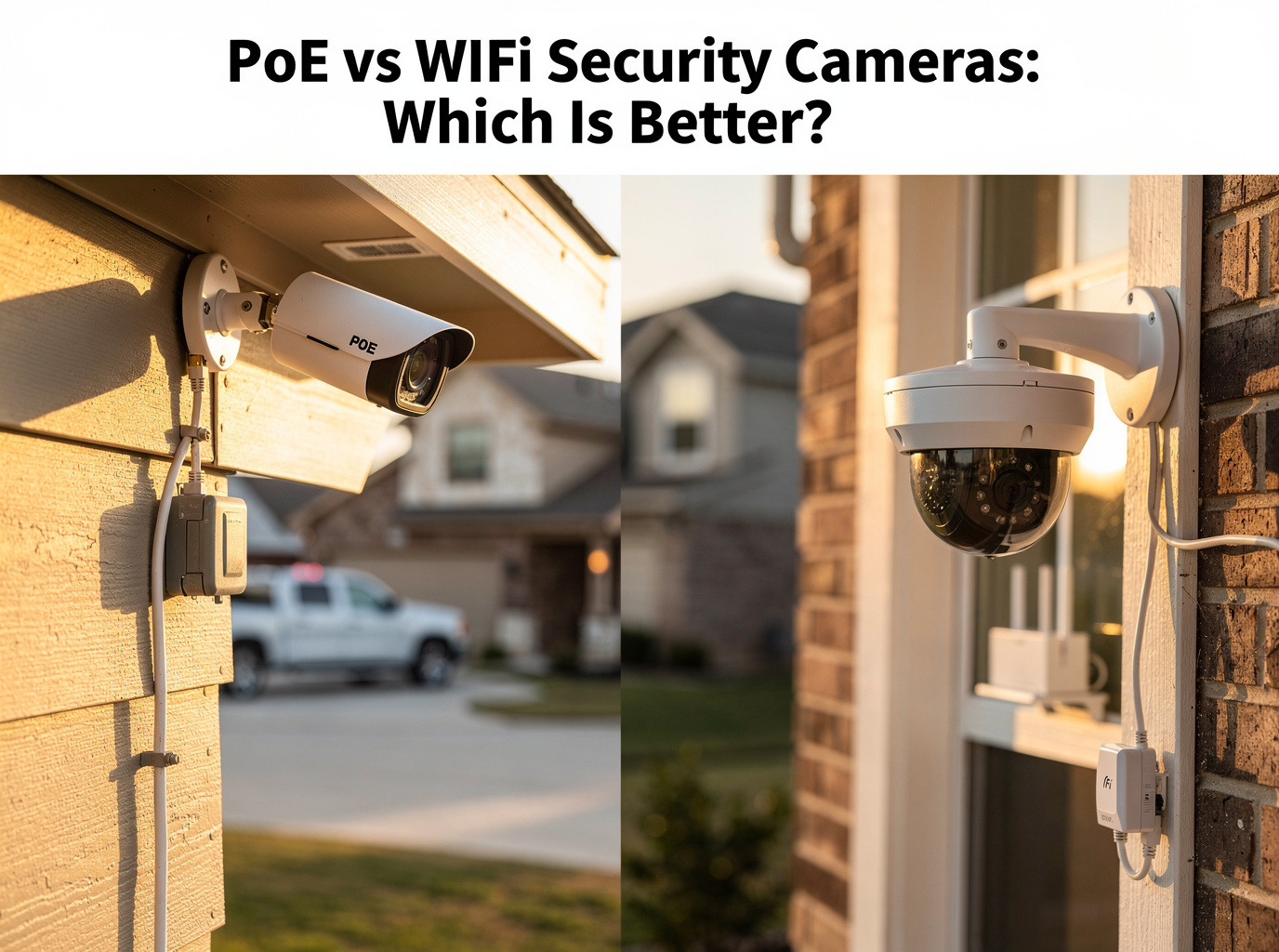
PoE security cameras deliver the stronger option for most properties in Houston and surrounding Texas neighborhoods because they maintain uninterrupted power and video transmission through a single Ethernet cable, sidestepping the interference and range limits that affect WiFi systems in older construction common across the city.
Power Delivery and Signal Stability
PoE systems run power and data over one Cat5e or Cat6 cable, eliminating separate power supplies that can fail during Houston's frequent summer storms and power fluctuations. This setup keeps cameras online even when WiFi routers drop due to lightning or grid strain common in areas like Katy and Sugar Land. WiFi cameras rely on wireless signals that weaken through brick, stucco, or metal siding found in many 1960s-1990s Houston homes, leading to dropped frames or blind spots. Installers often run PoE cable along existing attic routes or exterior walls to reach optimal camera positions without signal boosters. In practice, PoE maintains 1080p or 4K streams at full frame rate where WiFi units throttle or buffer during peak heat when device temperatures rise above 95 degrees. Property owners in The Woodlands or Pearland report fewer service calls after switching to PoE because the wired connection ignores foliage growth or new construction that blocks wireless paths.
Installation Realities in Houston Housing Stock
Older neighborhoods such as the Heights and Montrose feature dense layouts and mature trees that scatter WiFi signals, making pre-install site surveys essential to map dead zones. PoE installation requires running cable from a central switch or NVR to each camera, typically adding 2-4 hours per location but creating a stable backbone that lasts the life of the system. Wireless options suit newer builds in League City or Missouri City where open floor plans allow clear line-of-sight to the router, yet even there heavy rain can interrupt feeds. Technicians at Security Cameras Texas often combine both technologies, using PoE for perimeter cameras and WiFi for quick-add interior units. The single-cable approach also simplifies future upgrades because the same wiring supports higher-resolution models without new wireless access points.
Performance During Local Weather Patterns
Houston summers bring high humidity and temperatures that cause WiFi cameras to overheat and throttle, while PoE units draw power from a climate-controlled NVR indoors and stay cooler. Fall hurricane season brings wind-driven rain that scatters wireless signals across open lots in Pasadena or Friendswood, yet PoE cables sealed in conduit maintain connection. Winter cold snaps rarely drop below freezing but still affect battery-backed WiFi models more than hardwired PoE cameras. These patterns make PoE the default for long-term reliability on residential properties where owners want footage during actual events rather than after the fact.
Maintenance and Long-Term Costs
PoE setups reduce ongoing issues because there are no batteries to replace and fewer points of failure from weather exposure. Annual checks focus on cable connections and lens cleaning rather than signal troubleshooting common with wireless units. Homeowners can review footage from PoE Security Camera Installation projects to see how cable routing handles attic heat and exterior runs. WiFi systems may need periodic firmware updates or range extenders that add hidden costs over 5-7 years. For properties considering expansions, the wired backbone supports additional cameras without overloading the home network.
When WiFi Makes Sense and Next Steps
WiFi cameras work well for renters or temporary setups where drilling is not allowed, or for interior monitoring in open-plan homes with strong router placement. Readers exploring wireless limitations can read Can Security Cameras Work Without WiFi? for further details. Property owners ready to compare options on their specific site can contact SCT at 2644 Eva Pearl Street, Houston, TX during Mon–Fri 8am–6pm or Sat 9am–2pm for an on-site assessment that factors in actual building materials and tree cover.