2026-09-06 · Shawnie Alton
Security Camera Installation Process: What to Expect
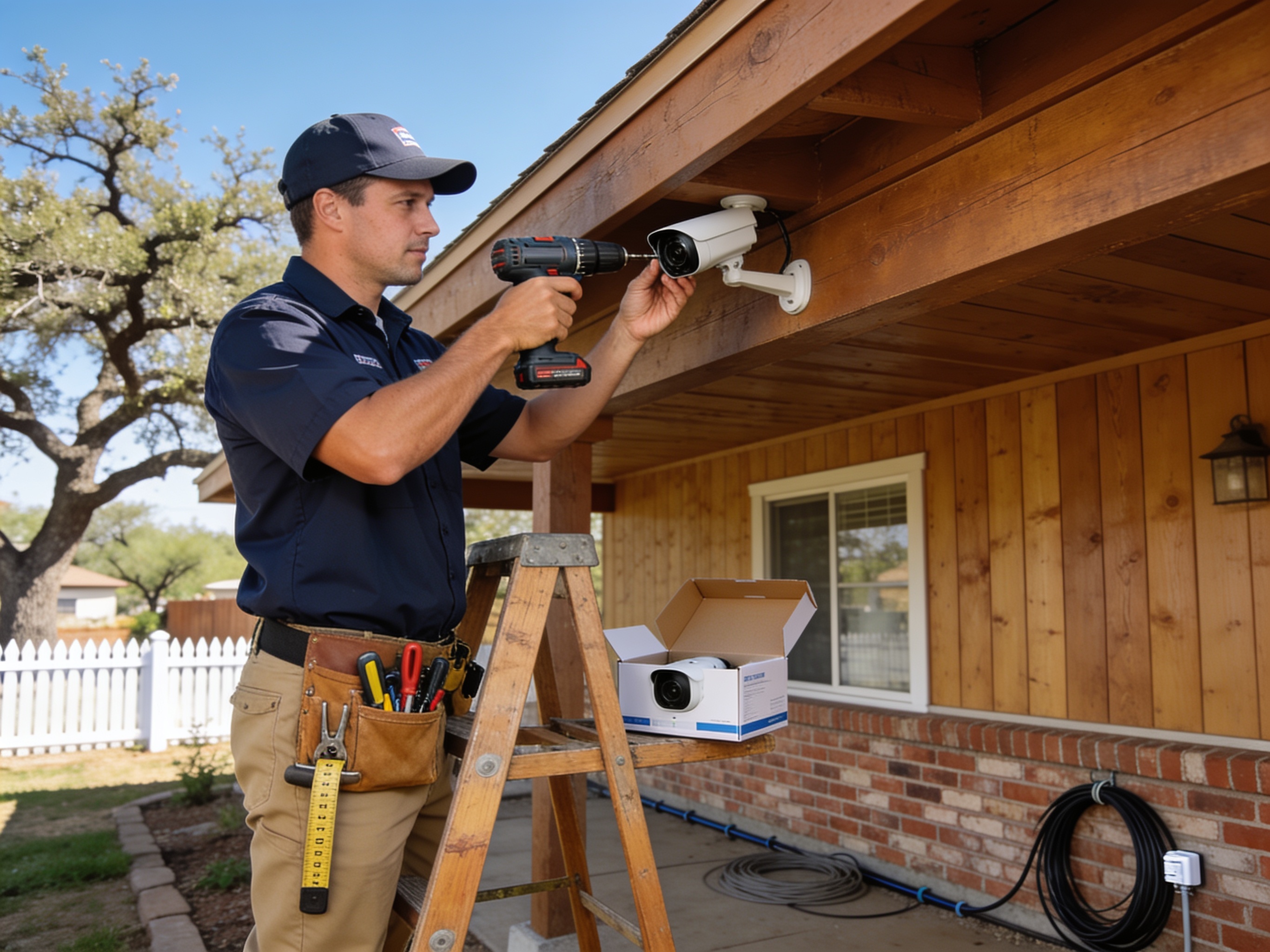
The security camera installation process in Houston typically unfolds over one day, starting with an on-site assessment and finishing with live testing, often requiring 4 to 8 hours for a standard four- to eight-camera residential setup.
Site Assessment and Planning
Every job in Houston begins with a detailed walk-through of the property. The installer evaluates camera angles, power sources, and network access while noting the home's age and construction type. Older neighborhoods such as the Heights or Montrose often feature plaster walls and limited attic space, which changes how cables are routed compared with newer builds in Katy or Sugar Land. Houston's frequent high humidity and heavy rain events also factor into placement decisions, so exterior cameras are positioned to avoid direct downspout runoff and low-lying flood zones. During this visit the installer measures distances for cabling runs and confirms whether existing network drops can support the system or if new lines must be added. Homeowners receive a written scope that lists exact camera locations and any needed permits or HOA notifications before work starts.
Cabling and Mounting Choices
Once the plan is approved, the crew runs cable and mounts hardware. In Houston's flat terrain and slab-on-grade homes, most runs travel through attics or exterior conduit to reach second-floor eaves. For properties near the bayous or in flood-prone pockets of Missouri City, installers often use gel-filled outdoor cable and elevated junction boxes. PoE switches are commonly placed in climate-controlled closets rather than garages to protect against summer heat and occasional storm surges. Each camera is secured with stainless hardware rated for coastal salt air, and mounts are angled to clear gutters and tree limbs that grow quickly in the local climate. The process avoids shared circuits with HVAC equipment to prevent voltage drops during peak summer loads.
System Configuration and Testing
After physical installation, the system is configured on-site. The installer sets resolution, frame rates, and storage schedules on the NVR while confirming remote access through the homeowner's network. Motion zones are drawn to ignore swaying palm fronds common in Houston yards, and night-vision performance is checked against actual ambient light from streetlamps and porch fixtures. A full functional test includes pulling the network cable to verify failover recording and confirming that alerts reach phones even during brief power flickers from afternoon thunderstorms. Homeowners are shown how to review footage and adjust settings before the crew leaves.
Follow-Up and Local Maintenance Realities
After the initial installation, Houston weather patterns drive the need for periodic checks. High pollen counts and sudden downpours can coat lenses, so a quick wipe-down schedule is recommended every few months. Properties in areas like The Woodlands with heavy tree cover may require more frequent lens cleaning than inland sites. Residential Security Camera Installation crews often return for these visits, and readers can review How to Choose a Security Camera System for Your Home for guidance on long-term settings. For larger sites, Commercial Security Camera Installation teams handle multi-building networks that face the same humidity and storm considerations on a bigger scale. Business hours at the Houston shop on Eva Pearl Street allow scheduling these follow-ups Monday through Friday 8am–6pm or Saturday mornings.