2026-09-06 · Shawnie Alton
Wired vs Wireless Security Cameras
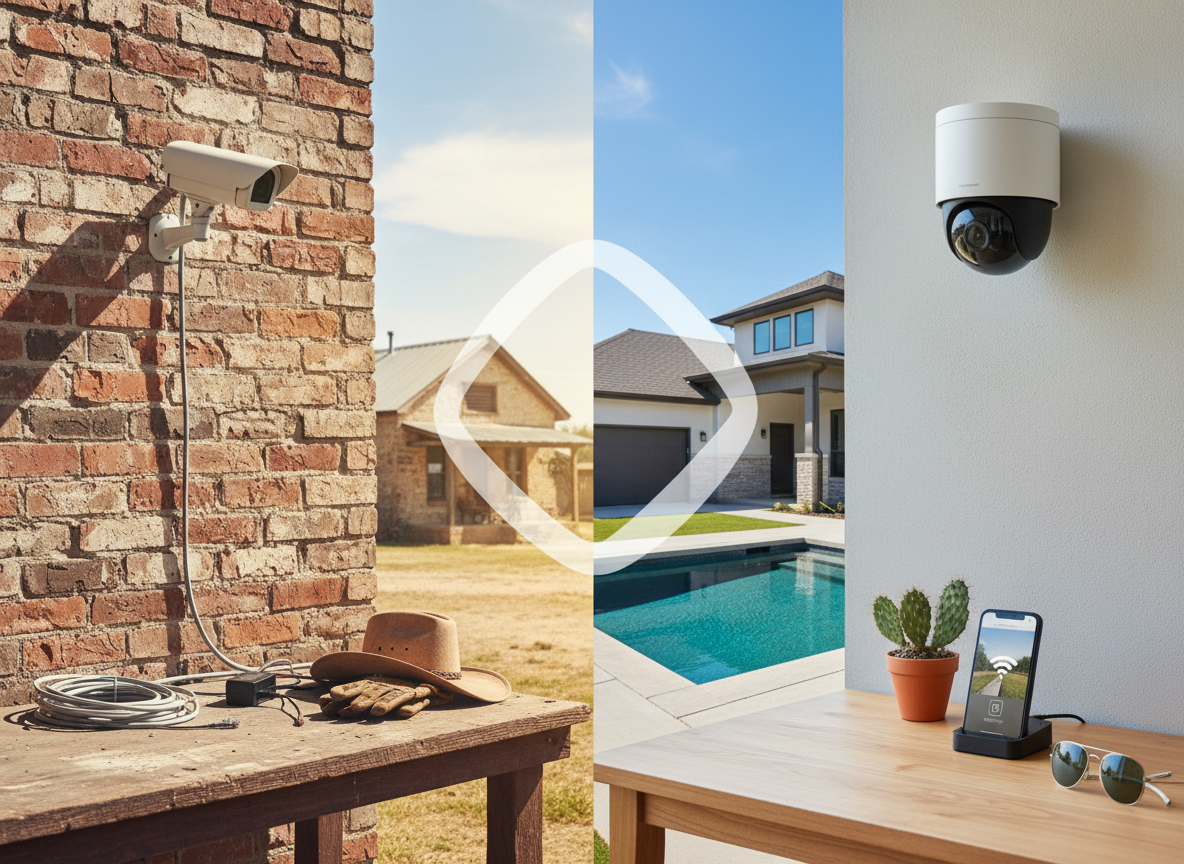
Wired security cameras maintain more consistent connections and power delivery than wireless models when installed in Houston homes, especially those built before 1990 in neighborhoods like Heights or Montrose where thick plaster walls and metal lath interfere with signals.
Power and Reliability in Houston Weather
Houston's frequent thunderstorms and high humidity create real challenges for wireless cameras that rely on batteries or Wi-Fi. A wired PoE setup draws power directly through the Ethernet cable, eliminating battery swaps that become frequent during summer heat when temperatures push devices harder. In areas prone to flooding like parts of East End, wired systems stay operational longer because they avoid the moisture damage that can short out wireless receivers mounted on exterior walls. Homeowners in older brick homes often see wireless range cut in half once the signal passes through multiple layers of masonry, making a hardwired run the practical choice for consistent footage during evening hours when most incidents occur.
Installation Differences for Local Housing Stock
Running cable through attics in single-story ranch homes common around Meyerland requires planning around existing insulation and HVAC ducts, but it yields clean, hidden lines that do not compete with household Wi-Fi networks already strained by multiple smart devices. Wireless installation avoids drilling through exterior brick on 1960s-era properties, yet technicians still must map dead zones created by metal roofs or dense tree cover along streets like those in River Oaks. For homes in expanding suburbs such as Katy, where new construction allows easier cable routing during build-out, wired PoE cameras integrate directly with existing network panels without adding extra access points that can overload routers during peak evening use.
Maintenance and Long-Term Performance
Wireless cameras need periodic battery checks and firmware updates that become easy to overlook once installed on second-story eaves, while wired systems require only occasional connector inspections at the NVR location. In Houston's salty coastal air, exposed wireless antennas can corrode faster on south-facing walls, shortening effective lifespan compared with sealed cable runs tucked inside conduit. Property owners who later add more cameras find wired networks scale by simply extending cable rather than reconfiguring mesh systems that may already sit at capacity from neighborhood Wi-Fi interference.
Choosing the Right Approach for Your Property
Evaluate your home's construction year and proximity to power sources before deciding. Properties near major corridors like I-10 often benefit from wired runs that bypass congested wireless channels used by nearby businesses. Review layout details with an installer who understands how local soil movement affects buried conduit runs during heavy rain seasons. For guidance on matching camera types to specific needs, see Security Camera Installation and Wireless Security Camera Installation. Homeowners exploring options further can read How to Choose a Security Camera System for Your Home to compare system architectures side by side.